Article 14 of the Saudi Evidence Law

Judicial and non-judicial admissions: a decisive difference in weight

Abdulaziz AlAmoudi
Legal bulletin titled 'Judicial and non-judicial admissions', explaining the definition of each and their practical effect on proof
View the post on LinkedIn

Not every admission carries the same statutory weight.

The distinction between a judicial and a non-judicial admission can decide the outcome of proof in a case — and it is routinely overlooked.

Where the difference lies

The test is where and on what occasion the admission was made, not how it was phrased. An admission made before the competent court, during the hearing of the case it relates to, rises to the strongest tier of evidence. Anything made outside the judicial forum — or even inside it but in a different case — does not carry that same conclusive weight, and remains subject to the court’s assessment.

Article 14 of the Saudi Evidence Law governs this distinction.

Why it matters day to day

Because most non-judicial admissions are made without intending to make one at all: an email apologising for a delay, a chat message acknowledging an amount, a sentence offered in a negotiation meeting. Any of these may later be produced as evidence.

Practical recommendation: treat your written correspondence as though it may one day be read aloud in court. Precision in drafting is not formality for its own sake — it is protection.
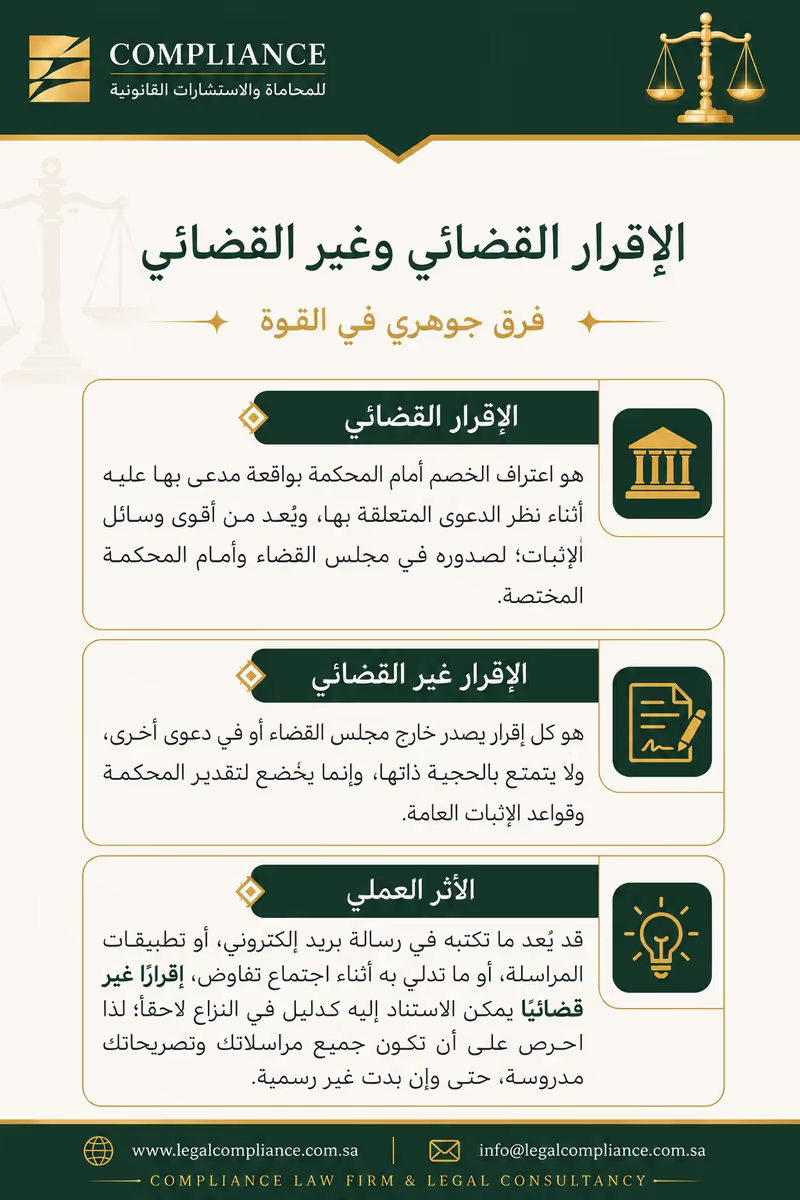

Key points

  1. The judicial admission

    An opponent's acknowledgement, before the court, of a fact alleged against them during the hearing of the related case. It ranks among the strongest means of proof, because it is made in the judicial forum and before the competent court.

  2. The non-judicial admission

    Any admission made outside the judicial forum, or in a different case. It does not carry the same conclusive weight; instead it is left to the court's assessment and to the general rules of evidence.

  3. The practical effect

    What you write in an email or a messaging app, or say during a negotiation meeting, may amount to a non-judicial admission that can later be relied on as evidence in a dispute. Make sure your correspondence and statements are considered — even when they feel informal.

More bulletins

Legal bulletin titled 'Conditions of the admitting party and the limits of the admission', covering capacity, the discerning minor, guardians and waqf administrators, and the application to companies
Article 15 of the Saudi Evidence Law

Who may make an admission, and how far it binds

When is an admission valid, and when does it bind nobody? Article 15 of the Saudi Evidence Law sets the capacity requirement and fixes the scope of admissions by a discerning minor, a guardian, a custodian and a waqf administrator — with a practical application to corporate delegations.

Chat with us